
A child’s first impression of dental care often comes from what they see in the room, not just what happens in the chair. Bright screens, quiet instruments, and a dentist who can show a parent exactly what is happening inside a small mouth all play a part in making a visit feel less intimidating, especially for a child who has never sat in a dental chair before. Parents searching for a Fremont pediatric dentist often want to know exactly what tools will be used during an exam, and why those tools were chosen in the first place.
At Mission Peak Pediatric Dentistry, Dr. Michael Wang built his Fremont practice around a focused set of tools rather than a long list of gadgets, because the goal is always accurate, comfortable care rather than equipment for its own sake. Two pieces of technology shape how we examine and explain your child’s oral health: digital x-rays and intraoral cameras. Below, we walk through how each one works and why it matters for your family.
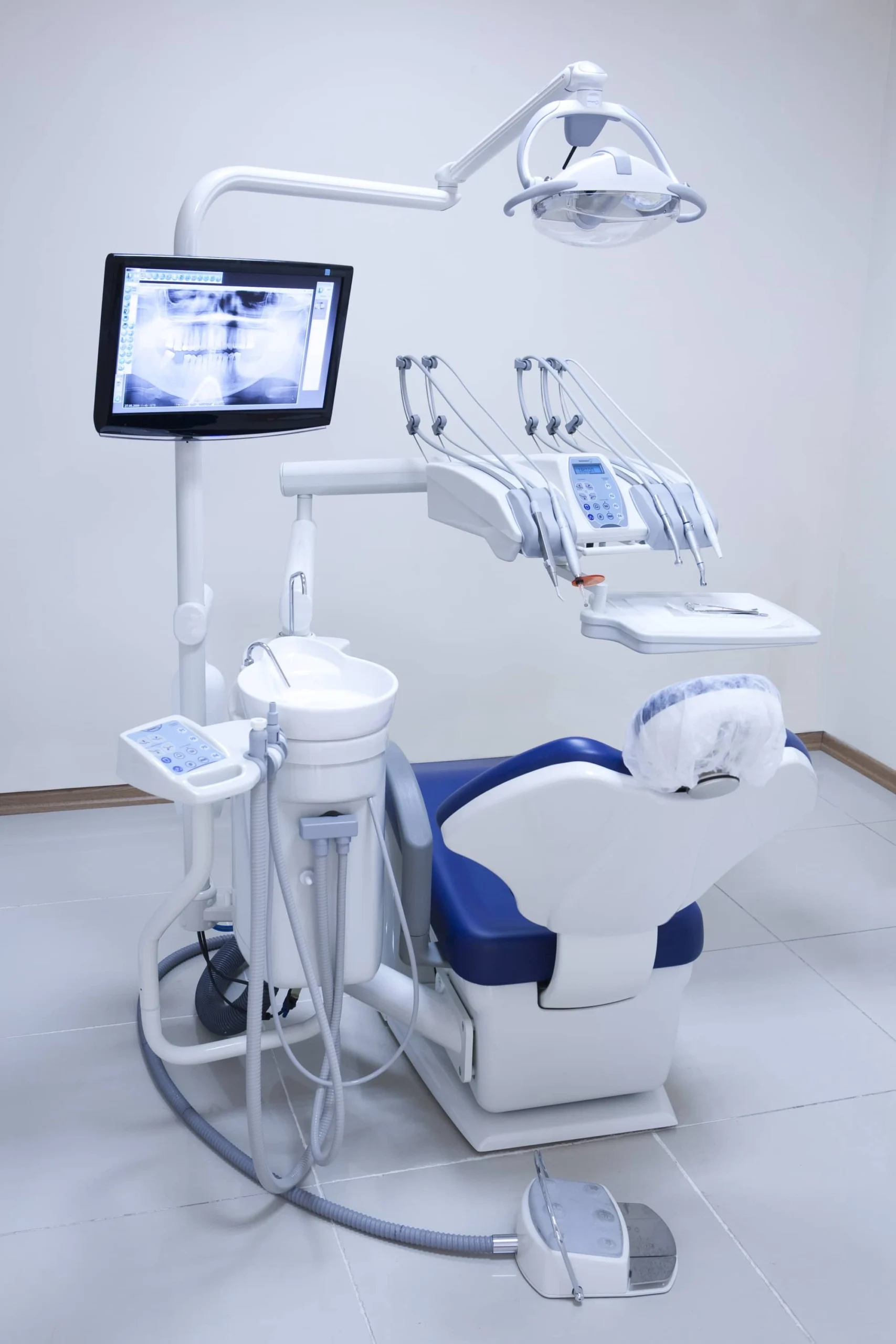

Digital x-rays are central to how we evaluate your child’s teeth and jaw development. Instead of waiting for film to develop, we capture an image instantly and view it on a screen right in the treatment room, so Dr. Wang can point to exactly what he sees and explain it in plain terms. This matters most for catching problems that are not visible during a standard exam, such as decay forming between teeth or issues with how permanent teeth are developing under the gum line.

Radiation exposure is a common concern for parents, and it is one we take seriously. The FDA recommends that pediatric imaging use the lowest radiation dose necessary for each child’s size and clinical need, and digital sensors are built to support that goal. We only take x-rays when there is a clear reason to do so, never as a routine extra step, and we are always glad to talk through the reasoning before moving forward.

Because we maintain digital images electronically, your child’s x-rays are also easy to reference during future visits. If a permanent tooth is forming below the gumline or a baby tooth root needs monitoring over several appointments, Dr. Wang can pull up earlier images and compare them directly, giving him a clearer picture of how your child’s smile is developing over time rather than relying on memory alone.

For certain visits, we also use an intraoral camera, a small wand-mounted lens that captures close-up images of teeth and gums and displays them on a screen for both you and your child to see. This tool gives us a magnified, well-lit view of areas that can be hard to assess with the naked eye, and it lets us show a parent precisely what we are looking at rather than describing it secondhand.
Many kids find this part of the visit genuinely interesting, because they get to watch along as we point things out on their own smile. That sense of involvement can turn what might feel like an unfamiliar procedure into something your child actually wants to participate in. We typically bring out the camera when it adds something useful to the conversation, rather than on every single visit, so the tool stays purposeful instead of routine.
The instruments themselves are only part of the picture. What matters most is how we use them to support an exam that is accurate and easy to follow. A clear digital x-ray or a close-up camera image gives us a more complete basis for recommending preventive care, and it gives you a clearer view of why a particular recommendation is being made for your child.
For children who feel nervous about dental visits, having a dentist who can show rather than simply tell often makes a real difference in how the appointment feels. We also offer sedation dentistry for kids who need extra support getting comfortable, and the imaging tools we use play into that approach by helping us plan treatment with as much information as possible before your child is ever in the chair.
If your family is preparing for an upcoming appointment, our first visit guide walks through what to expect from start to finish, including how these tools fit into a typical exam. Many parents find that knowing what their child will see and experience ahead of time helps ease any pre-appointment nerves on both sides, for the parent as much as the child.
No. Digital x-rays use significantly less radiation than older film-based x-rays, and we follow the FDA’s guidance to use the lowest dose necessary for each child’s size and clinical need. We only take x-rays when there is a clear reason to do so, never as a routine extra step.
Yes. Both digital x-rays and intraoral camera images appear instantly on a screen in the treatment room, so Dr. Wang can show you exactly what he is looking at and explain it as the visit happens.
The intraoral camera is a small, lightweight wand that simply captures images, it does not touch the teeth in a way that causes discomfort. Many children find it interesting, since they get to watch along on the screen as we look at their own smile.
Our digital sensors capture images quickly, which helps minimize the time your child needs to stay still. If you have concerns about your child’s comfort during imaging, we encourage you to contact our office so we can talk through what to expect before your visit.
Not necessarily. We bring out the intraoral camera when it adds something useful to the exam, so the tool stays purposeful rather than becoming a routine step at every single appointment.
We use cookies to improve your experience on our site. By using our site, you consent to cookies.
Manage your cookie preferences below:
Essential cookies enable basic functions and are necessary for the proper function of the website.
CloudFlare provides web performance and security solutions, enhancing site speed and protecting against threats.
Service URL: developers.cloudflare.com (opens in a new window)
These cookies are needed for adding comments on this website.
Google reCAPTCHA helps protect websites from spam and abuse by verifying user interactions through challenges.
Google Tag Manager simplifies the management of marketing tags on your website without code changes.
Statistics cookies collect information anonymously. This information helps us understand how visitors use our website.
Google Analytics is a powerful tool that tracks and analyzes website traffic for informed marketing decisions.
Service URL: policies.google.com (opens in a new window)
Marketing cookies are used to follow visitors to websites. The intention is to show ads that are relevant and engaging to the individual user.
Google Maps is a web mapping service providing satellite imagery, real-time navigation, and location-based information.
Service URL: policies.google.com (opens in a new window)