
The American Academy of Pediatric Dentistry recommends a first dental visit within six months of your baby’s first tooth, and no later than their first birthday. That visit is a short, gentle infant oral health exam where Dr. Michael Wang checks your child’s teeth and gums and answers your questions. Good habits start well before that appointment, though, and the first three years shape a lot of what follows.
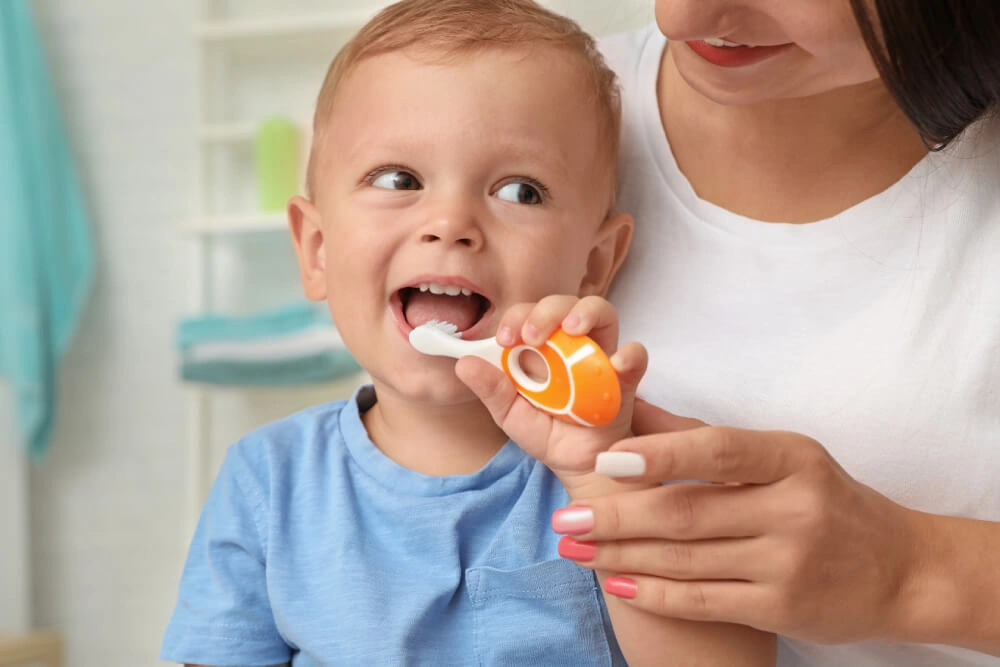



We can care for kids of all ages. If your infant has one or more teeth, bring them into our office. Dr. Wang can examine their mouth and make sure their teeth and gums are healthy. He can also discuss feeding tips, how to brush their new teeth and gums, diet advice, and other information that will help you care for your infant as they grow into a toddler.
Kids usually get all of their baby teeth by the age of 3 years, so toddlers have much different dental needs than infants. At Mission Peak Pediatric Dentistry, we can help with their first teeth cleanings and x-rays, teething tips, and more. With the help of Dr. Wang and our team, you can feel confident that your child’s baby teeth are healthy, strong, and growing into their mouth properly.
You should brush your child’s teeth at least twice a day for two minutes. We recommend brushing once in the morning right after they wake up, and once before they go to bed. You also should make sure you come to our office every six months for preventive care. Routine oral exams and teeth cleanings help our team keep an eye on your child’s oral health, and help ensure their teeth and gums stay healthy.
Within six months of the first tooth, and no later than the first birthday. The first appointment is a short infant oral health exam, and it gives you a chance to ask about feeding, teething and brushing. If your child is older and hasn’t been yet, it isn’t too late. Dr. Wang is a pediatric dentist in Fremont who sees kids of all ages, and the best time to start is now.
Avoid putting your child to bed with a bottle of milk, formula or juice, because those sugars sit on the teeth overnight. Use water for a bedtime bottle, wipe or brush the teeth after the last feeding, and start moving from a bottle to a cup around the first birthday.
Most children give up the habit on their own between ages 2 and 4. If it continues past that point, mention it at your child’s next checkup so we can look at how their teeth are coming in and talk through gentle ways to help them stop.
We use cookies to improve your experience on our site. By using our site, you consent to cookies.
Manage your cookie preferences below:
Essential cookies enable basic functions and are necessary for the proper function of the website.
CloudFlare provides web performance and security solutions, enhancing site speed and protecting against threats.
Service URL: developers.cloudflare.com (opens in a new window)
These cookies are needed for adding comments on this website.
Google reCAPTCHA helps protect websites from spam and abuse by verifying user interactions through challenges.
Google Tag Manager simplifies the management of marketing tags on your website without code changes.
Statistics cookies collect information anonymously. This information helps us understand how visitors use our website.
Google Analytics is a powerful tool that tracks and analyzes website traffic for informed marketing decisions.
Service URL: policies.google.com (opens in a new window)
Marketing cookies are used to follow visitors to websites. The intention is to show ads that are relevant and engaging to the individual user.
Google Maps is a web mapping service providing satellite imagery, real-time navigation, and location-based information.
Service URL: policies.google.com (opens in a new window)