Watching your child grip the armrest and hold their breath before a dental procedure is hard for any parent to sit through, and for kids with dental anxiety, sensory sensitivities, or complex treatment needs, even a routine visit can feel overwhelming. Mission Peak Pediatric Dentistry has built its practice around solving exactly this problem, offering both nitrous oxide and IV sedation so children in Fremont can receive the care they need without fear standing in the way.
Sedation dentistry works by helping a child relax through some or all of a procedure, and the right level depends on their age, anxiety, and the treatment involved. Both methods are monitored closely from start to finish, and our team walks parents through exactly what to expect before, during, and after the appointment.
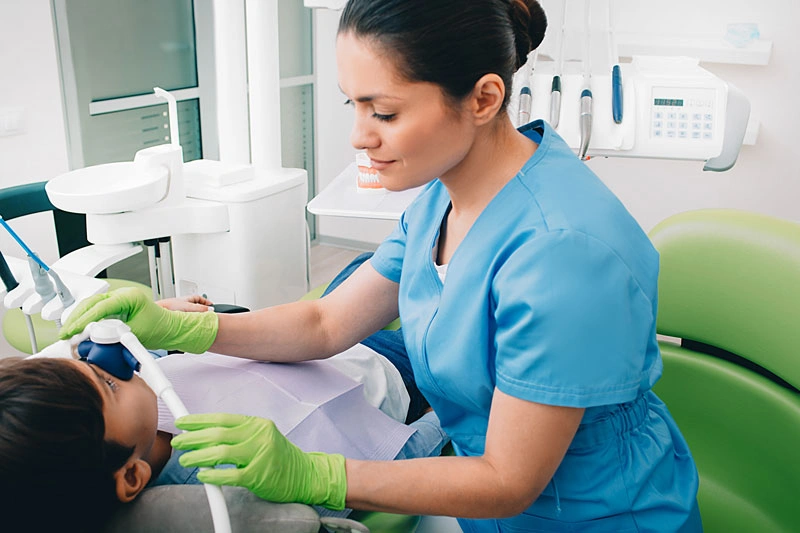
Nitrous oxide, often called laughing gas, is a mild inhaled sedative that wears off within minutes and lets children stay awake and responsive throughout treatment. It works well for kids who feel a little nervous but can still cooperate with some encouragement, and most children are back to their normal selves within minutes of the mask coming off.
IV sedation goes a step further for children who need deeper relaxation, whether because of a lengthy procedure like a baby root canal or because of extreme fear that makes cooperation difficult. This option keeps a child in a more deeply relaxed state for the duration of treatment while still allowing them to breathe on their own throughout the procedure.
Choosing between nitrous oxide and IV sedation comes down to a few factors, and we talk through each one with parents before recommending a path forward.

Younger children and those with limited ability to sit still for treatment often benefit from a deeper level of sedation.

A child who becomes distressed at the sight of dental tools may need more support than one who is simply nervous.

A quick cavity filling calls for a different approach than a procedure involving several teeth or an extraction.

Certain health conditions require extra precaution when deciding on a sedation plan.
We review all of this during a consultation so families feel confident in the plan before treatment day arrives.

Sedation dentistry is often the right fit for children who have had difficult dental experiences in the past, kids who are simply too young to sit through a longer procedure, and those receiving care through our special needs dentistry services, where sensory sensitivities can make a standard appointment especially stressful. Parents frequently tell us they were nervous about sedation itself until they saw how calm their child was during recovery.
Delaying care out of fear of the dentist’s chair can also lead to bigger problems down the road, and national data backs this up. Between 2019 and 2020, the percentage of children who received an annual dental exam or cleaning dropped noticeably across every region of the country, with the steepest decline among children ages one to four. Sedation dentistry helps close that gap for anxious or avoidant kids by making it possible to complete needed treatment in a single visit instead of postponing care appointment after appointment.
Safety is built into every sedation appointment we provide. Our team monitors heart rate, oxygen levels, and breathing throughout the procedure, and we adjust the sedation level in real time based on how a child responds. We also require a thorough health history review beforehand so we can flag anything that might affect how a child processes sedation medication.
Parents receive clear aftercare instructions covering everything from what their child can eat that day to how long grogginess typically lasts, and our office is always reachable if a question comes up once you are home. We also know Fremont families are busy, and many of you are managing dental care between school pickups, work schedules, and everything else on the calendar, so families near urgent pediatric dental situations in Mission San Jose, Irvington, and the neighborhoods around Fremont’s junior college can get treatment completed in as few visits as possible.
Dr. Michael Wang founded Mission Peak Pediatric Dentistry to give Fremont families a place where kids feel safe and parents feel informed, and sedation dentistry sits at the center of that mission. Board-certified by the American Academy of Pediatric Dentistry and trained through a pediatric residency at Montefiore Medical Center, Dr. Wang built his practice specifically to serve children who need more than a standard approach to feel comfortable in the chair, and he and our team are fluent in Mandarin and Spanish to make sure language is never a barrier to that comfort.
If your child has struggled with fear, sensory overwhelm, or a treatment that simply takes longer than a typical visit allows, we would like to talk with you about whether nitrous oxide or IV sedation is the right fit. You can learn more about our practice and Dr. Wang’s background on our website, and when you are ready to schedule, reach out through our contact form to get started.
This method of sedation is ideal if your child is nervous at the dentist or if your child has trouble sitting still for their exams and cleanings. Dr. Michael will pump a mixture of nitrous oxide (laughing gas) and oxygen through a nose mask, and your child will breathe through this mask whenever directed to do so.
As they breathe in the gas, they’ll begin to feel less nervous, and may experience a “floaty” or “dreamy” feeling. Children don’t fall asleep with laughing gas, but they’ll be very calm throughout their procedure.
A few of the best benefits of this sedation method is that side effects are minimal, and the effects of the sedation wear off within a few minutes of the nose mask being removed. Your child can go back to school or to their daily activities after their appointment.
IV sedation uses the same medication as oral conscious sedation, but it is delivered directly into the bloodstream via an IV. This means your child will be sedated more deeply and the sedation will take effect almost immediately after it’s introduced to the bloodstream.
It’s very common to fall asleep during treatment with IV sedation. Although your child will likely forget much, if not all, of their procedure, they can still be woken up and respond to commands.
Like oral conscious sedation, sleepiness or grogginess will occur for 4-6 hours or longer after their treatment. So you will need to plan the rest of your day accordingly.
Sedation is most often used to treat dental anxiety and keep children at ease during their treatment. Fear of the dentist is very common, and sedation can keep your child calm during their appointments.
Additionally, sedation helps with pain and discomfort during more invasive procedures, such as tooth extractions. It also helps young patients feel more comfortable if they need to sit still for longer treatment times.
This depends on the method of sedation. With laughing gas, your child will feel light-headed, giggly, and relaxed, but will be fully conscious and aware of their surroundings. They will also feel less discomfort during treatment.
Oral conscious sedation and IV sedation will usually make patients feel groggy or sleepy. Your child will likely fall asleep, and probably won’t remember much about the procedure. However, they will not be unconscious, and can still be woken and respond to commands.
General anesthesia is the deepest level of sedation. Your child will be completely unconscious and will not feel anything or remember anything from the procedure.
We use cookies to improve your experience on our site. By using our site, you consent to cookies.
Manage your cookie preferences below:
Essential cookies enable basic functions and are necessary for the proper function of the website.
CloudFlare provides web performance and security solutions, enhancing site speed and protecting against threats.
Service URL: developers.cloudflare.com (opens in a new window)
These cookies are needed for adding comments on this website.
Google reCAPTCHA helps protect websites from spam and abuse by verifying user interactions through challenges.
Google Tag Manager simplifies the management of marketing tags on your website without code changes.
Statistics cookies collect information anonymously. This information helps us understand how visitors use our website.
Google Analytics is a powerful tool that tracks and analyzes website traffic for informed marketing decisions.
Service URL: policies.google.com (opens in a new window)
Marketing cookies are used to follow visitors to websites. The intention is to show ads that are relevant and engaging to the individual user.
Google Maps is a web mapping service providing satellite imagery, real-time navigation, and location-based information.
Service URL: policies.google.com (opens in a new window)