
Finding out your child needs a root canal can feel alarming, especially when you picture the drawn-out procedure adults sometimes describe, but pulp therapy for baby teeth looks and feels much different. Mission Peak Pediatric Dentistry offers pulp therapy, often called a pulpotomy or baby root canal, to save a damaged primary tooth and keep your child comfortable and cavity-free while their smile continues to develop.
Pulp therapy becomes necessary when decay or injury reaches the soft tissue inside a tooth, known as the pulp, which contains nerves and blood vessels. Left untreated, this can lead to infection, pain, and even early tooth loss, which is why we treat it as a priority whenever a young patient needs it.
A pulpotomy removes the infected or inflamed portion of the pulp while leaving the healthy pulp tissue in the root intact, which allows the tooth to continue supporting your child’s bite and guiding the permanent tooth beneath it into place. We clean the area thoroughly, place a medicated material to protect the remaining healthy tissue, and seal the tooth with a crown or filling to restore its strength.
The procedure is typically completed in a single visit, and most children tolerate it well with local anesthesia alone. For kids who feel anxious about dental work, we also offer our sedation dentistry options, including nitrous oxide, to keep the experience calm and manageable from start to finish.
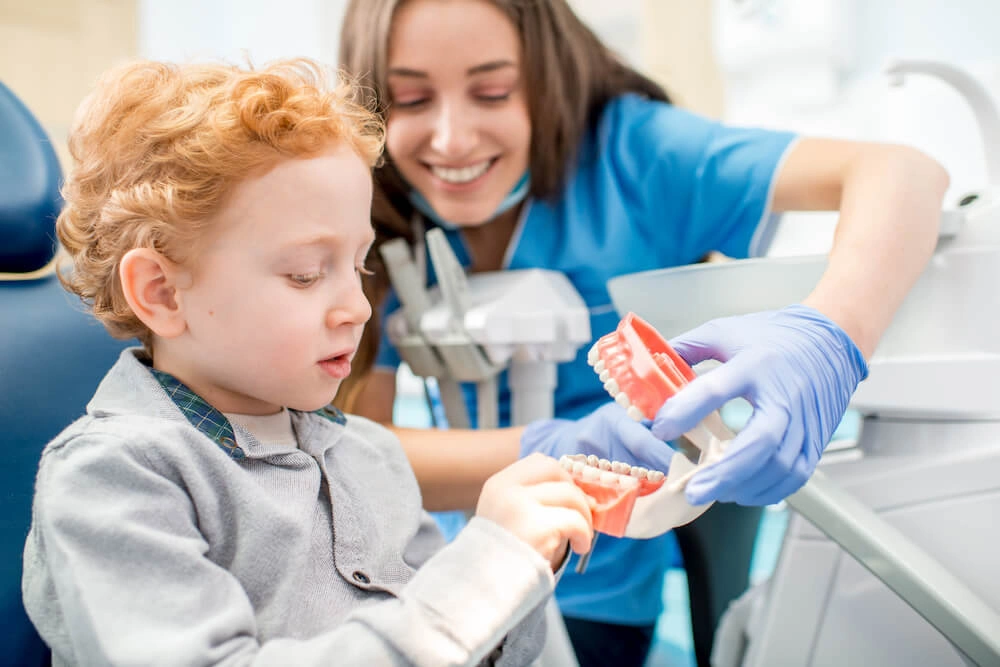
Baby teeth do more work than most parents realize, and losing one too early can affect chewing, speech development, and the position of the permanent tooth waiting underneath. Pulp therapy gives us a way to treat the infection while preserving that natural spacer, which often means fewer complications for the permanent tooth developing beneath it.
Untreated decay is more common than many parents expect, and it rarely resolves on its own. According to the CDC’s 2024 Oral Health Surveillance Report, nearly 18 percent of children between ages 6 and 8 had at least one primary tooth with untreated decay, a rate that climbs even higher in underserved communities. Catching decay before it reaches the pulp is always preferable, but when it does progress that far, pulp therapy offers a reliable way to intervene without pulling the tooth.

Parents are often the first to notice something is wrong, and a few signs tend to show up before a child can fully explain what they are feeling.
If you notice any of these signs in your child, scheduling an exam right away gives us the best chance to treat the tooth before the infection spreads further.
Pulp therapy works well for many cases, but occasionally decay or damage is too extensive for the tooth to be saved even with treatment. When that happens, we talk through options like tooth extractions and explain what comes next for your child’s bite and future permanent teeth. Every recommendation we make is based on what gives your child the healthiest long-term outcome, not simply the fastest fix.
Recovery from a pulpotomy is usually straightforward, and most kids return to their normal routine within a day. Mild soreness around the treated tooth is common for the first day or two, and over-the-counter pain relief formulated for children is typically enough to keep them comfortable.
We recommend softer foods for the first 24 hours and encourage parents to watch for ongoing pain, swelling, or a fever, as these can occasionally signal that the infection has not fully resolved. Families in Mission San Jose, Irvington, and the neighborhoods surrounding Fremont’s junior college can always reach our office directly if any concerns come up during recovery, and we are glad to take a look if something does not seem right.
Dr. Michael Wang built Mission Peak Pediatric Dentistry around the idea that even the more involved procedures, like pulp therapy, should feel manageable for kids and reassuring for parents. Board-certified by the American Academy of Pediatric Dentistry and trained through a pediatric residency at Montefiore Medical Center, Dr. Wang and our team bring both clinical experience and a genuinely calm approach to every baby root canal we perform, with fluency in Mandarin and Spanish available for families who prefer to communicate in those languages.
If your child is showing signs of tooth pain or you have been told a pulpotomy may be needed, we would like to help you understand the options and get your child comfortable again. You can learn more about our practice and Dr. Wang’s background on our website, and when you are ready to schedule an exam, reach out through our contact form to get started.
We use cookies to improve your experience on our site. By using our site, you consent to cookies.
Manage your cookie preferences below:
Essential cookies enable basic functions and are necessary for the proper function of the website.
CloudFlare provides web performance and security solutions, enhancing site speed and protecting against threats.
Service URL: developers.cloudflare.com (opens in a new window)
These cookies are needed for adding comments on this website.
Google reCAPTCHA helps protect websites from spam and abuse by verifying user interactions through challenges.
Google Tag Manager simplifies the management of marketing tags on your website without code changes.
Statistics cookies collect information anonymously. This information helps us understand how visitors use our website.
Google Analytics is a powerful tool that tracks and analyzes website traffic for informed marketing decisions.
Service URL: policies.google.com (opens in a new window)
Marketing cookies are used to follow visitors to websites. The intention is to show ads that are relevant and engaging to the individual user.
Google Maps is a web mapping service providing satellite imagery, real-time navigation, and location-based information.
Service URL: policies.google.com (opens in a new window)