
Every child deserves compassionate, unhurried dental care — especially kids with complex medical histories, physical or developmental differences, sensory sensitivities, or dental anxiety that can make a routine appointment feel overwhelming. Special needs dentistry means adapting the visit itself: extra time, a calmer environment, flexible communication, and options like dental sedation when it’s the right fit for your child.
Dr. Michael Wang and the Mission Peak Pediatric Dentistry team welcome families from Milpitas and the surrounding Santa Clara County communities at our Fremont office, about 15 minutes north via I-880. Explore our special needs dentistry program in more detail, or call us at (510) 980-7325 to schedule your child’s visit.
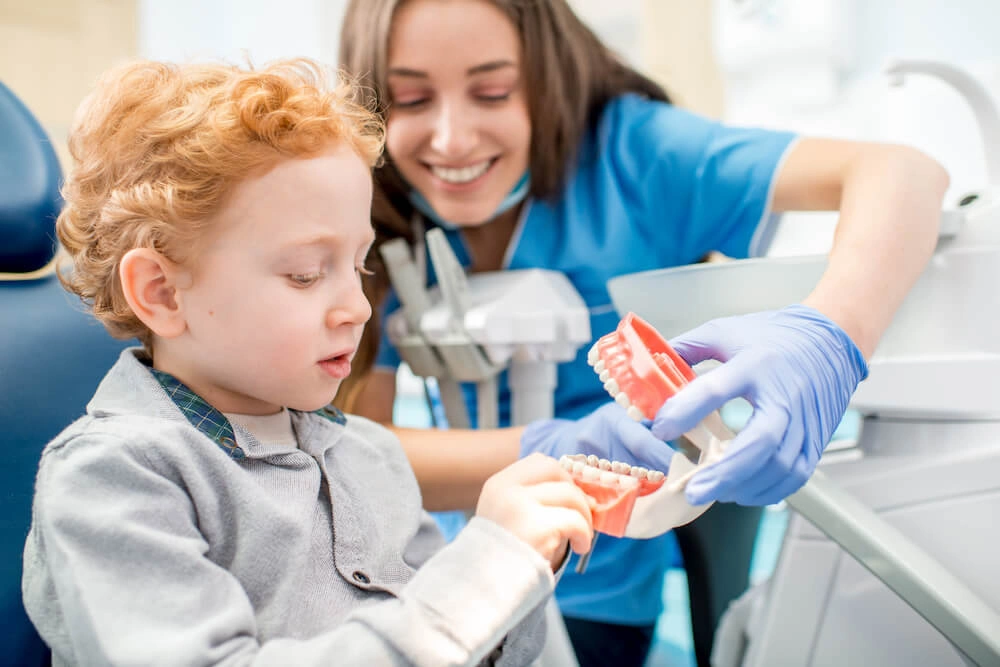

Let us know about your child’s needs before the appointment — sensory sensitivities, mobility needs, or anything else — so our team can prepare the room and schedule accordingly for your family’s visit from Milpitas.

A pre-visit office tour lets your child meet Dr. Wang and get comfortable with the space before treatment begins — a small step that often makes a big difference for kids who feel anxious about new environments.

Nitrous oxide and IV sedation are both available for children with dental anxiety or special healthcare needs, helping them stay relaxed and comfortable so treatment can be completed safely.
Share your child’s relevant medical history and oral health records ahead of time so our team has the full picture before treatment begins.

During a dental cleaning, we gently remove plaque and tartar, polish and floss the teeth, and finish with a fluoride varnish to help strengthen enamel.

Afterward, we’ll walk you through what we found and, if any follow-up treatment is needed, help you schedule the next appointment.
Consistency matters most for kids with special healthcare needs — seeing the same dental home visit after visit builds trust and eases anxiety over time.
As a pediatric dentist near Milpitas, Dr. Michael Wang and our team take the time to get to know each child individually, not just their chart.
We offer dental sedation for kids with physical disabilities or dental anxiety, and we’re glad to adjust the treatment room itself — dimmer lighting, a larger space, extra time, or comfort items like noise-canceling headphones.
Sharing your child’s medical history and current medications ahead of time helps us tailor treatment to their specific needs.
Consistency matters most for kids with special healthcare needs — seeing the same dental home visit after visit builds trust and eases anxiety over time.
As a pediatric dentist near Milpitas, Dr. Michael Wang and our team take the time to get to know each child individually, not just their chart.
We offer dental sedation for kids with physical disabilities or dental anxiety, and we’re glad to adjust the treatment room itself — dimmer lighting, a larger space, extra time, or comfort items like noise-canceling headphones.
Sharing your child’s medical history and current medications ahead of time helps us tailor treatment to their specific needs.
“Special healthcare needs” covers any developmental, physical, or medical condition that makes a traditional dental visit harder to navigate — including dental anxiety itself, since fear alone can be a real barrier to care. Autism, Down syndrome, ADHD, epilepsy, vision or hearing impairment, and other neurological or mental health conditions all fall under this umbrella, along with less obvious ones like sleep apnea, which can raise the risk of oral health problems and shape how we approach treatment.
Physical and cognitive conditions can make it harder for a child to sit through a traditional appointment, and sensory sensitivities, autism, or dental anxiety can turn a routine visit into something overwhelming — though it doesn’t have to be that way with the right accommodations. Some conditions also affect saliva production, cavity risk, gum health, or which foods a child can comfortably eat, all of which factor into how we plan their care.
Brushing twice a day with a soft-bristle brush and fluoride toothpaste matters more than which brush or technique you use. If your child has dexterity challenges, you may need to brush for them, assist hand-over-hand, or supervise closely — showing them how to hold and angle the brush, then letting them practice. A toothbrush with a larger handle and smaller head can make gripping and maneuvering easier, and letting your child pick a brush they like goes a long way toward building the habit. Just be sure they’re using an age-appropriate amount of toothpaste.
We use cookies to improve your experience on our site. By using our site, you consent to cookies.
Manage your cookie preferences below:
Essential cookies enable basic functions and are necessary for the proper function of the website.
CloudFlare provides web performance and security solutions, enhancing site speed and protecting against threats.
Service URL: developers.cloudflare.com (opens in a new window)
These cookies are needed for adding comments on this website.
Google reCAPTCHA helps protect websites from spam and abuse by verifying user interactions through challenges.
Google Tag Manager simplifies the management of marketing tags on your website without code changes.
Statistics cookies collect information anonymously. This information helps us understand how visitors use our website.
Google Analytics is a powerful tool that tracks and analyzes website traffic for informed marketing decisions.
Service URL: policies.google.com (opens in a new window)
Marketing cookies are used to follow visitors to websites. The intention is to show ads that are relevant and engaging to the individual user.
Google Maps is a web mapping service providing satellite imagery, real-time navigation, and location-based information.
Service URL: policies.google.com (opens in a new window)