
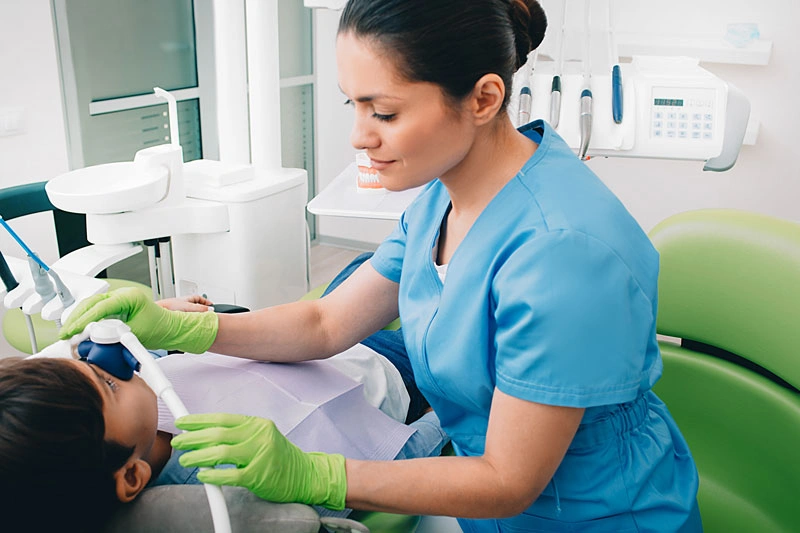



This method of sedation is ideal if your child is nervous at the dentist or if your child has trouble sitting still for their exams and cleanings. Dr. Michael will pump a mixture of nitrous oxide (laughing gas) and oxygen through a nose mask, and your child will breathe through this mask whenever directed to do so.
As they breathe in the gas, they’ll begin to feel less nervous, and may experience a “floaty” or “dreamy” feeling. Children don’t fall asleep with laughing gas, but they’ll be very calm throughout their procedure.
A few of the best benefits of this sedation method is that side effects are minimal, and the effects of the sedation wear off within a few minutes of the nose mask being removed. Your child can go back to school or to their daily activities after their appointment.
IV sedation uses the same medication as oral conscious sedation, but it is delivered directly into the bloodstream via an IV. This means your child will be sedated more deeply and the sedation will take effect almost immediately after it’s introduced to the bloodstream.
It’s very common to fall asleep during treatment with IV sedation. Although your child will likely forget much, if not all, of their procedure, they can still be woken up and respond to commands.
Like oral conscious sedation, sleepiness or grogginess will occur for 4-6 hours or longer after their treatment. So you will need to plan the rest of your day accordingly.
This method of sedation is ideal if your child is nervous at the dentist or if your child has trouble sitting still for their exams and cleanings. Dr. Michael will pump a mixture of nitrous oxide (laughing gas) and oxygen through a nose mask, and your child will breathe through this mask whenever directed to do so.
As they breathe in the gas, they’ll begin to feel less nervous, and may experience a “floaty” or “dreamy” feeling. Children don’t fall asleep with laughing gas, but they’ll be very calm throughout their procedure.
A few of the best benefits of this sedation method is that side effects are minimal, and the effects of the sedation wear off within a few minutes of the nose mask being removed. Your child can go back to school or to their daily activities after their appointment.
IV sedation uses the same medication as oral conscious sedation, but it is delivered directly into the bloodstream via an IV. This means your child will be sedated more deeply and the sedation will take effect almost immediately after it’s introduced to the bloodstream.
It’s very common to fall asleep during treatment with IV sedation. Although your child will likely forget much, if not all, of their procedure, they can still be woken up and respond to commands.
Like oral conscious sedation, sleepiness or grogginess will occur for 4-6 hours or longer after their treatment. So you will need to plan the rest of your day accordingly.
Sedation is most often used to treat dental anxiety and keep children at ease during their treatment. Fear of the dentist is very common, and sedation can keep your child calm during their appointments.
Additionally, sedation helps with pain and discomfort during more invasive procedures, such as tooth extractions. It also helps young patients feel more comfortable if they need to sit still for longer treatment times.
This depends on the method of sedation. With laughing gas, your child will feel light-headed, giggly, and relaxed, but will be fully conscious and aware of their surroundings. They will also feel less discomfort during treatment.
Oral conscious sedation and IV sedation will usually make patients feel groggy or sleepy. Your child will likely fall asleep, and probably won’t remember much about the procedure. However, they will not be unconscious, and can still be woken and respond to commands.
General anesthesia is the deepest level of sedation. Your child will be completely unconscious and will not feel anything or remember anything from the procedure.