
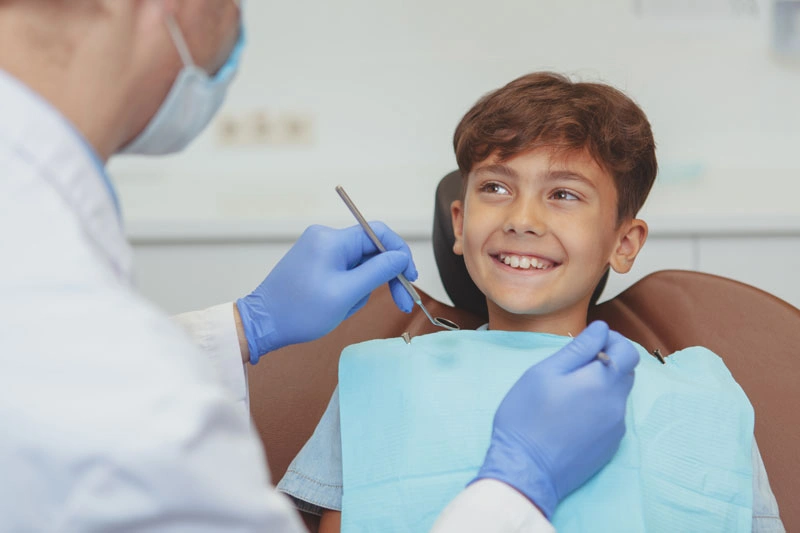





Pediatric dental crowns have historically been limited to stainless steel, leaving your child with silver teeth that may make them feel self-conscious about their smiles.
EZ Crowns offer the same protection as stainless steal crowns, but they are white, matching the color of your child’s natural teeth. Similarly to traditional stainless steal, these white crowns help seal a tooth after it has been damaged or broken. This option just leaves little patients with a seamless, confident smile.
After Dr. Michael determines which option is best for them, they will proceed in the same way, cleaning and preparing the tooth, and then choosing a pre-fitted dental crown to be placed directly over the damaged tooth structure to cover and protect it.
Extractions are typically a last-resort option for pediatric dentists. But occasionally, a tooth may simply be too damaged to save, and extraction may be the best way for your child to get relief from pain and discomfort. Using special tools and sedation, Dr. Michael can extract troublesome teeth quickly and without pain or discomfort.
Composite fillings are made of a dental resin and are matched to the color of your child’s tooth. Unlike metal fillings, they do not contain any mercury. In addition, composite fillings require the removal of less enamel during tooth preparation and have a very tight hold, so they help keep your child’s tooth healthy and strong.
Pediatric dental crowns have historically been limited to stainless steel, leaving your child with silver teeth that may make them feel self-conscious about their smiles.
EZ Crowns offer the same protection as stainless steal crowns, but they are white, matching the color of your child’s natural teeth. Similarly to traditional stainless steal, these white crowns help seal a tooth after it has been damaged or broken. This option just leaves little patients with a seamless, confident smile.
After Dr. Michael determines which option is best for them, they will proceed in the same way, cleaning and preparing the tooth, and then choosing a pre-fitted dental crown to be placed directly over the damaged tooth structure to cover and protect it.
Restorative dentistry is used to treat damaged or decayed teeth. This includes cavities and infections, as well as teeth that have been chipped, broken, loosened, or knocked-out prematurely due to oral trauma. Restorative treatments can also help prevent oral development issues after tooth loss, and resolve other oral health problems like tongue and lip ties.